
Nina and Pedro’s Late Encounter
Senza sangueThis flow follows Nina and Pedro Cantos from the first recognition at the lottery kiosk through a truthful account of the past to an intimate reunion shaped by guilt, choice, and memory.
increasing Bearing strength in each event
 decreasing
Bearing strength in each eventdecreasingThe Kiosk Recognition
The Kiosk Recognition
An unexpected meeting
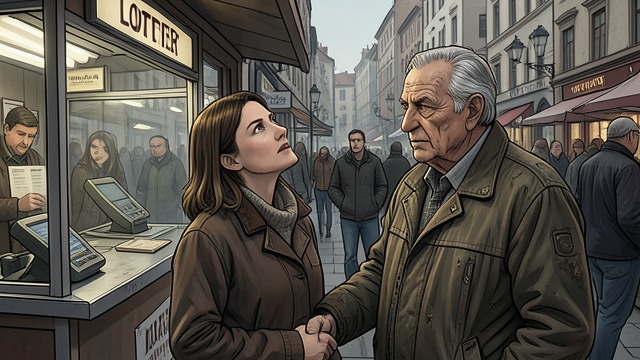
Nina approaches the lottery kiosk at Galleria Florencia and asks to buy a ticket. Pedro Cantos, the elderly seller, looks at her face with unusual attention before either has fully explained why they are speaking.
His question about whether she has been waiting hints that he recognizes more than a customer. Nina, in turn, studies him and notices that he does not fit the image she associates with lottery sellers.
A deliberate invitation
Nina buys the ticket and asks Pedro to have a drink with her. He initially refuses because he is working, but she asks him again, and he eventually closes the kiosk and leaves with her.
The invitation shifts their encounter from a public transaction toward a private reckoning. Neither names the past immediately, but the decision to go together creates the space in which Pedro can acknowledge that Nina came looking for him.
The Name Nina Returns
The Name Nina Returns
A name lost to violence
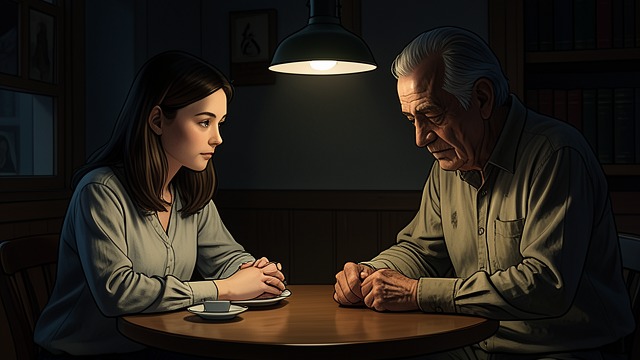
At the cafe, Nina tells Pedro that she was called Nina as a child, but that everything ended on the day her father was killed. Since then, she has lived under many names, and the old one has not been used for her.
She says she liked the name Nina. The admission is quiet, but it reveals how the violence did more than take her family: it separated her from the identity she had before the farmhouse became a place of death.
Listening across time
Pedro has not yet fully explained his part in the past, while Nina begins with the story of the life that followed. She recounts being taken in by Ricardo Uribe and the events that eventually placed her in the household of the Count of Torrelavid.
Her account is not a plea for sympathy. It is a way of speaking in front of the man who remembers the hidden child, allowing the adult Nina to take control of her own story before Pedro tells his version of the night that changed it.
The Confession of Silence
The Confession of Silence
Pedro names his role
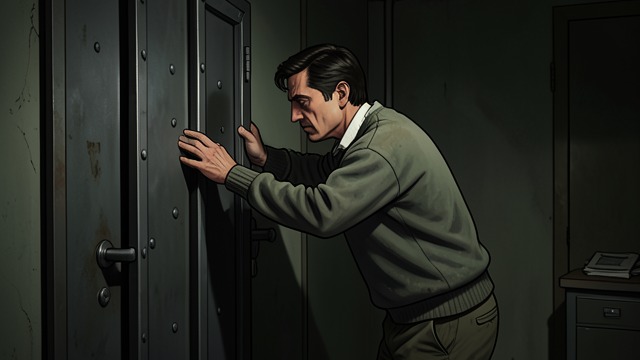
Pedro tells Nina that three men killed her father and that he is the only one of them still alive. He admits that he found her in the hidden compartment and closed it again without telling the others she was there.
He says he has carried the secret for his whole life. At first he kept silent from fear; later, silence became a settled habit as the country tried to forget the war and move forward.
Nina tests the account
Nina listens without immediately declaring what she believes. She knows the night partly through stories told afterward, and she asks whether Pedro truly remembers the events and whether the account he gives should be more trusted than hers.
The exchange makes confession only a beginning. Pedro has finally spoken, but Nina does not owe him a response that will release him from guilt; she remains the person who decides what his truth means to her.
An Unfinished Reckoning
An Unfinished Reckoning
Ideals and the dead
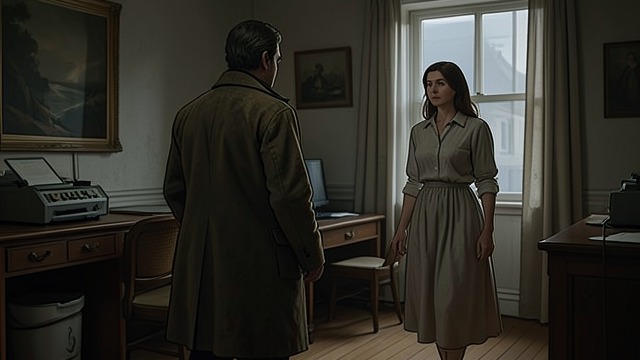
Pedro tries to explain the violence by describing the better world he and his comrades believed they were building. Nina presses him on what that ideal meant when the men were killing children and acting after the war had supposedly ended.
Their conversation exposes the distance between Pedro’s political language and Nina’s lived experience. He speaks of necessity, suffering, and historical change; she brings him back to the particular people who died and to the choices made in the farmhouse.
A question without release
Pedro eventually says he is tired and asks Nina to leave him in peace. She asks what he fears, but does not force an answer when he cannot continue. Her challenge has opened the truth without producing a clear reconciliation.
The silence that follows does not erase their connection. Pedro has told her what he can, and Nina has made him confront what his explanations cannot settle; their relationship now contains both recognition and an unresolved moral distance.
The Shared Bed

The Shared Bed
An invitation freely made
After Pedro breaks down and Nina defends him from the mockery of nearby patrons, she asks whether he would make love with her. He says they are old, and she acknowledges that they both are; neither pretends that age or the past has disappeared.
Nina guides him to Hotel California, where they enter a room without turning on the light. Their closeness grows slowly, through an embrace and a kiss, rather than through any declaration that their history has been repaired.
A return with tenderness
Afterward, Pedro gives Nina his name. She repeats it and remembers him as a person who cried, touched her carefully, and allowed himself to be vulnerable in her presence.
She then curls behind him in the posture of the child who once waited underground. The intimacy gives her a way to return to an old emotional scene on her own terms, seeking shelter beside the person whose silence once left her alone.
At Galleria Florencia on a rainy spring evening
At the cafe after Pedro leaves the kiosk
Later in the cafe conversation
After Pedro explains his wartime beliefs
Near the end of their meeting at Hotel California
